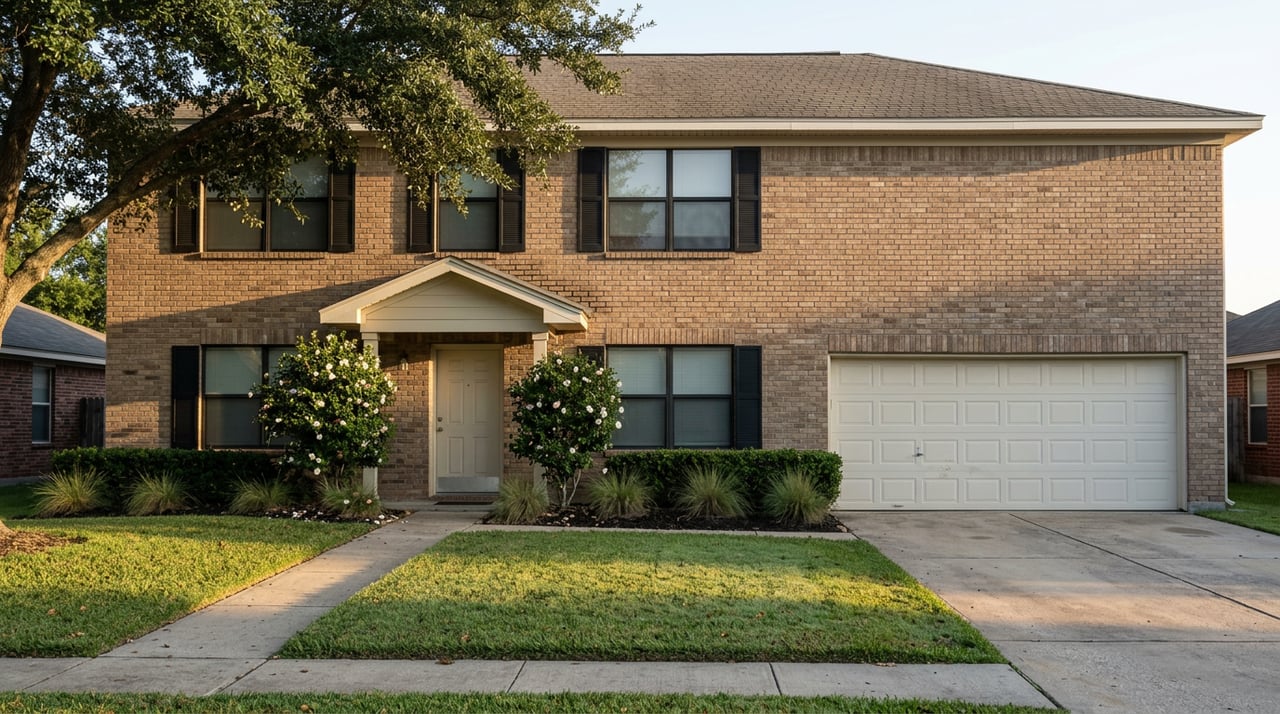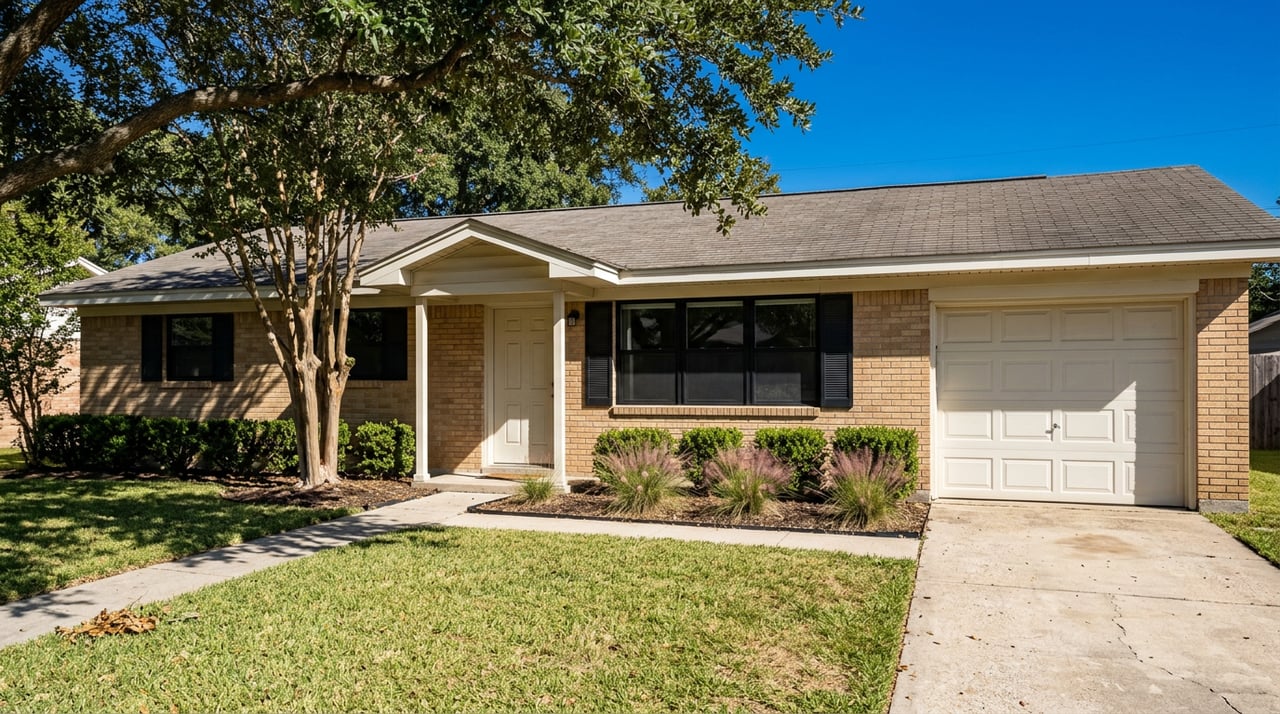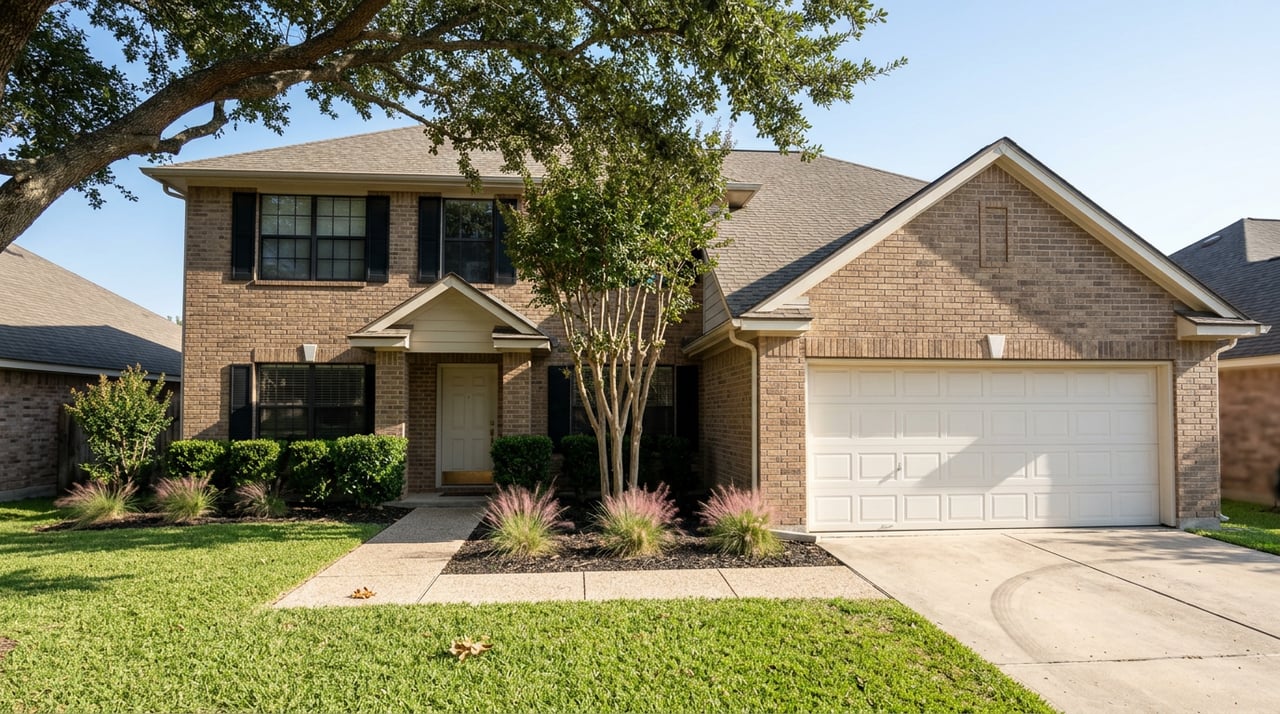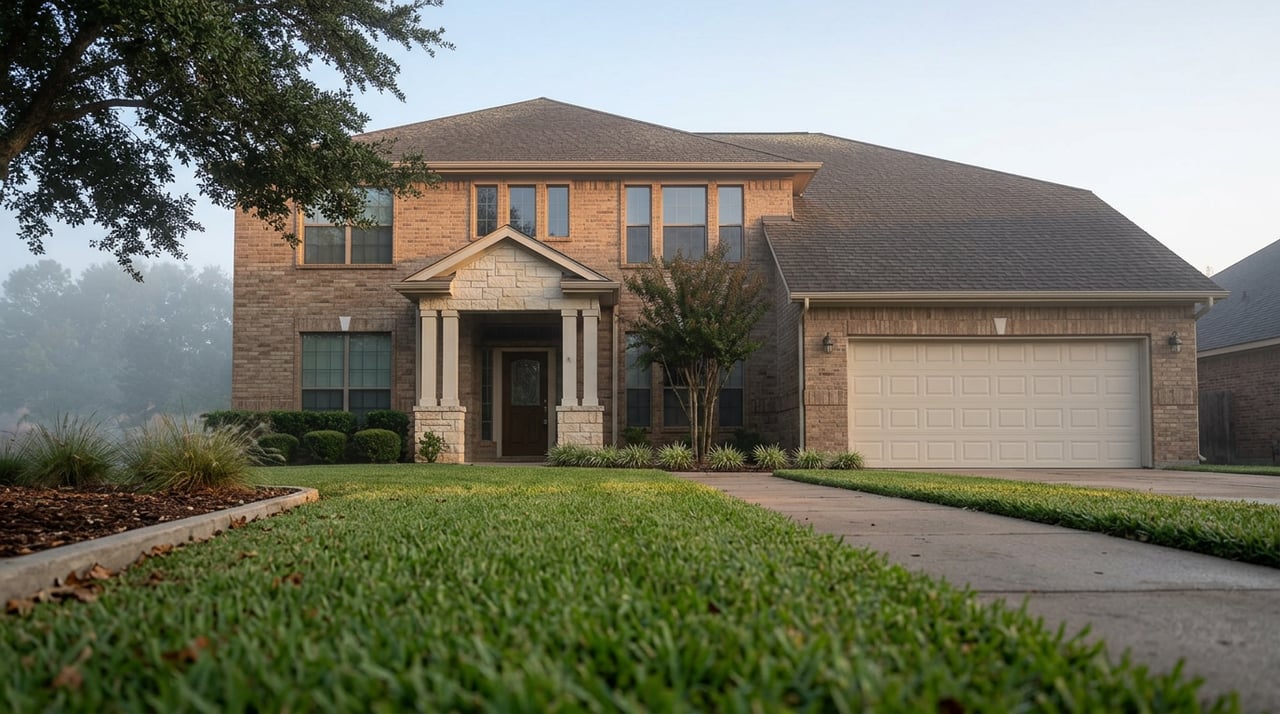
This spring, a four-bedroom new-construction home in Pflugerville's Blackhawk community sat on the market for 240 days before its price found the right level, even with builder incentives attached. Across town in Travis Heights, the typical home this year has sold in about 42 days. Both neighborhoods sit inside the same metro area. Neither seller would recognize the other's experience from a single headline number.
That's the problem with treating "the Austin median" as one fact. As of July 2026, the Austin-Round Rock-San Marcos metro median sale price sat at $435,000, up about 1 percent year over year, according to Unlock MLS data reported by CultureMap Austin. Inside the city limits, the median was $577,000, down 1.4 percent over the same period. Those two numbers alone tell you the metro and the city are drifting apart. What they don't tell you is that inside the city itself, entire neighborhoods are moving in opposite directions at the same time, and the gap between them is wide enough to change how you should shop, price, or negotiate depending on which few square miles you're standing in.
The Gap Between What Sellers Ask and What Buyers Actually Pay
Start with a number most Austin coverage skips past. An August 2026 analysis of Austin-Area MLS data found that average list price across the entire market has fallen 11.4 percent from its March 2023 peak, from $708,929 down to $628,207. That sounds like a market correcting in an orderly way.
But look at price per square foot, the measure that strips out house size and gets closer to what buyers actually experience at closing. The typical Austin-Area MLS buyer is now paying about $206 per square foot, down 26.4 percent from the $280 peak recorded in April 2022. Sellers have repriced their listings by roughly 11 percent. The real market has moved by roughly 26 percent. That 15-point gap is the space between what sellers believe their home is worth and what buyers have actually been paying for comparable homes.
For a buyer, that gap is leverage. It means a lot of active listings are still anchored to a version of the market that no longer exists, and the data gives you grounds to negotiate from strength rather than guesswork. For a seller, it's a warning. Pricing off last year's comps, or off what a similar house sold for at the 2022 peak, will produce a listing that sits.
What $416,000 Actually Buys, Depending on Where You're Standing
The Austin-Area MLS median sold price was $416,000 as of the August 21, 2026 market snapshot, down about 24 percent from the May 2022 peak. That's a useful number for a headline. It's close to useless for deciding where to buy, because it blends neighborhoods that are appreciating with neighborhoods that are still absorbing oversupply from the last construction boom.
Here's what that median looks like once you split it by neighborhood, using the most recent 2026 figures available for each:
| Area | Recent 2026 median | What's driving it |
|---|---|---|
| East Austin (78702, includes Holly, Govalle, East Cesar Chavez) | Roughly $650,000 to over $760,000 depending on the data cut and month | Walkability, restaurant density, and a limited supply of original bungalows and infill lots near downtown |
| Travis Heights | Around $950,000 | Limestone bluff lots with lake and skyline views, in a footprint of roughly 1,100 homes total |
| Bouldin Creek | Different 2026 snapshots put this anywhere from about $900,000 to $1.4 million | Extremely low sales volume each month, which makes the median swing hard on just a handful of closings |
| Pflugerville | $390,000 in February 2026, essentially flat year over year | 6.7 months of supply, solidly in buyer's market territory, but demand has stayed steady rather than collapsing |
| Manor, Hutto, and far North Austin | Below the metro median, with builder incentives layered on top | New construction delivered faster than buyers could absorb it during 2020 to 2022 |
The spread inside that table is the whole story. Inner-loop neighborhoods like East Austin, Travis Heights, Bouldin Creek, Hyde Park, and Mueller have mostly recovered their 2022 losses and are showing modest appreciation. The outer ring, particularly Manor, Hutto, and the far northern edges of the city, is still working through inventory that builders overbuilt three or four years ago. A single "Austin is up" or "Austin is down" headline can't hold both of those realities at once.
Why the Small Neighborhood Numbers Bounce Around So Much
Notice the Bouldin Creek range in that table. Depending on which month's snapshot you pull, the reported median swings from around $900,000 to $1.4 million. That's not sloppy reporting. It's what happens when a neighborhood only sells a few dozen homes a year. Travis Heights, for comparison, has roughly 1,100 total homes in its footprint, and typically sees somewhere around 90 active listings at any given time. When the sample size for a monthly median is that small, one high-end custom build or one distressed sale can move the number by six figures.
This matters if you're comparing neighborhoods off a single data pull from a portal site. A citywide median built on thousands of monthly transactions is relatively stable month to month. A neighborhood-level median built on a dozen closings is not. If you're serious about a specific pocket of Austin, the smarter move is to look at a rolling twelve-month window rather than a single month's snapshot, and to treat any one month's number as a data point, not a verdict.
The Oversupply Problem the Inner Loop Doesn't Feel
In February 2026, housing research firm Zonda categorized Austin as a "significantly oversupplied" market, one of only two cities in the country to carry that label, according to reporting from Spectrum News. The same report noted Austin had the largest year-over-year decline in average home value of any major U.S. metro, around 6 percent, based on Zillow data.
That designation is real, and it's driving the price action in places like Manor and Hutto, where builders are sitting on more build-ready lots than the current pace of construction can absorb, and where some homes have lingered on the market for 300 days or more before builders layered in rate buydowns and closing cost credits to move them. But that oversupply story is a suburban new-construction story. It's not what's happening in East Austin, Travis Heights, or Bouldin Creek, where inventory is thin, sales are quick, and the age of the housing stock, not the pace of new building, is the constraint on supply.
What This Means If You're Buying or Selling Right Now
If you're a buyer comparing neighborhoods on price alone, the metro median will steer you wrong in both directions. It understates what you'll actually pay if you want walkability and proximity to downtown, and it overstates how competitive things are if you're open to a new-construction community in Manor, Hutto, or Pflugerville, where builder incentives and aged inventory are giving buyers real room to negotiate.
If you're selling, the 15-point gap between list price and per-square-foot reality is the single most useful number in this piece. Pull actual closed comps from the last 90 days in your specific neighborhood, not a citywide trend line, and price against what buyers have paid, not what the market was worth at its 2022 high point.
A Few Questions Worth Answering Directly
Is Austin a buyer's market or a seller's market in 2026? Both, depending on where you're looking. Inner-loop neighborhoods with thin inventory are behaving like seller's markets. Outer suburbs with new-construction oversupply, particularly Manor, Hutto, and parts of far North Austin, favor buyers.
Why did my neighborhood's median price look so different last month? If you're watching a smaller neighborhood, a handful of closings can swing the number significantly. Ask for a rolling twelve-month view rather than judging off a single month.
Does the citywide median tell me anything useful? It's a fine headline for tracking the metro's general direction. It's not detailed enough to price a specific listing or evaluate a specific neighborhood, which is why pulling actual comps for your target area matters more than the topline number.
Comparing Austin neighborhoods block by block, rather than trusting a single citywide figure, is exactly the kind of work a local team does every week. If you're weighing East Austin against Pflugerville, or trying to figure out what a specific median actually means for your situation, Bolanos Realty can walk you through the current comps for the neighborhood you're watching. Schedule Your Free Consultation and get a read on the market that goes past the headline number.