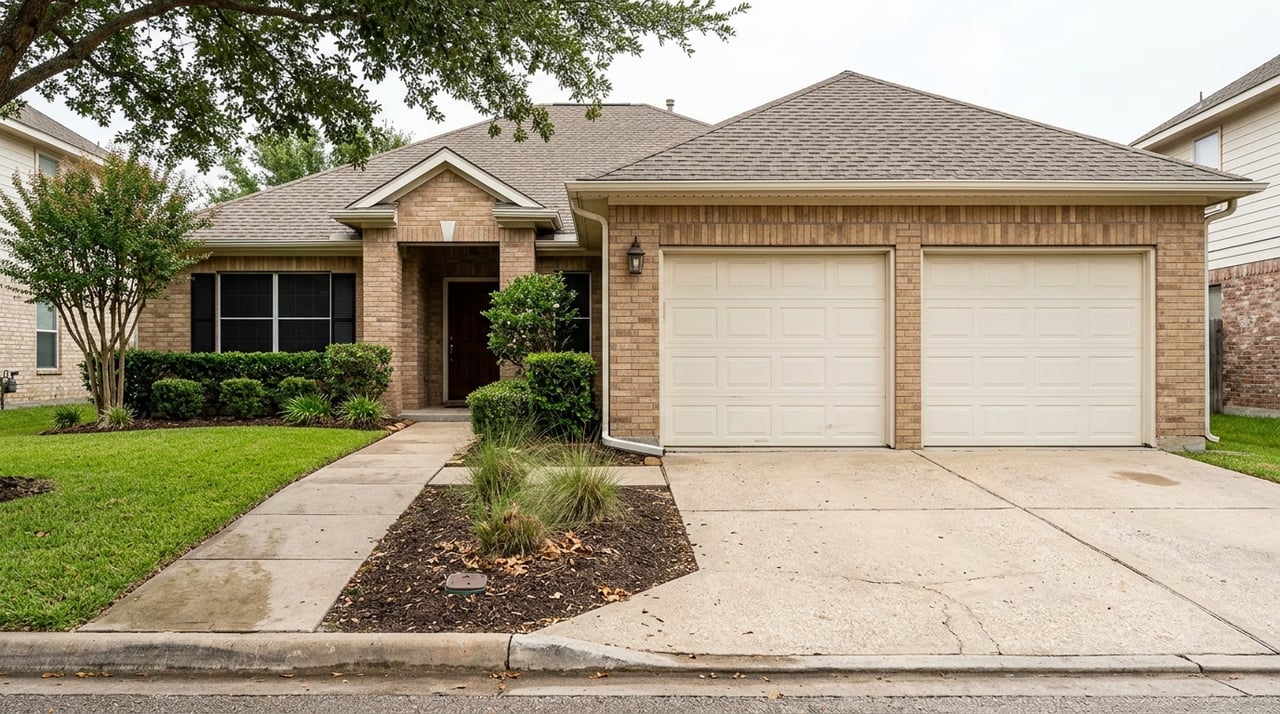
If you have been thinking about buying a rental home in the Houston area, you are not alone. Houston keeps drawing investor attention because it combines population growth, a large job base, and rental demand that can support single-family homes in many submarkets. The key is knowing that Houston is not one market, and a good rental decision usually comes down to block-by-block details, realistic numbers, and careful local due diligence. Let’s dive in.
Why Houston draws rental investors
Houston sits inside a very large metro that is still growing. The Houston-Pasadena-The Woodlands metro added 198,171 residents from July 2023 to July 2024, bringing the total population to 7,796,182, while Harris County reached 5,009,302. For you as an investor, that matters because more people and more households can create a deeper tenant pool over time.
Job growth also supports rental demand. In May 2025, the metro had 3.47 million nonfarm jobs, with gains in trade, transportation and utilities, education and health services, leisure and hospitality, and mining and logging. That broad mix can help support demand from renters with different budgets, household sizes, and commute patterns.
Another reason Houston stands out is affordability compared with other large metros. The City of Houston says local housing costs are 18.8% below the national average and rank among the most affordable of the nation’s largest metro areas. That can help keep the area attractive to both new residents and renters who want more space for their monthly payment.
Why single-family rentals can fit Houston
Single-family rentals fill an important role in Houston’s housing mix. The City of Houston’s 2025 to 2029 Consolidated Plan says 48.3% of housing units are in 1-unit structures, while larger multifamily properties also make up a meaningful share of the market. That means your rental home will compete not only with other houses, but also with attached homes and apartments.
Houston is also a renter-heavy market. The same city plan says 58% of occupied housing is renter-occupied. That does not guarantee performance for every property, but it does show that renting is a major part of how people live across the city.
Larger homes may have a practical advantage in some areas. The city plan notes that 81.4% of Houston homeowners live in 3-plus-bedroom units, which supports the idea that many households value extra bedrooms and more living space. For investors, that can make well-located 3-bedroom and 4-bedroom rentals worth a closer look.
What Houston rents look like right now
One of the biggest mistakes investors make is comparing a single-family home to the wrong rent data. In Houston, detached homes often lease for much more than the citywide average rent because apartment averages include smaller and attached housing types. If you want a realistic estimate, you need recent single-family rental comps first.
Recent data gives a useful rent band for Houston-area single-family rentals. HAR reported an average single-family lease price of $2,050 in Q1 2026 and $2,214 in January 2026. By comparison, Zillow’s broader Houston average rent was $1,541 in March 2026, and HAR reported January 2026 townhome and condo rentals at $1,847.
The takeaway is simple: a single-family rental that looks expensive against the citywide average may still be priced correctly for its segment. If the home is larger, newer, or in a stronger leasing pocket, its rent should be judged against similar single-family homes. That is where local comps become far more useful than broad city averages.
Rent versus own still supports demand
Houston’s rent-versus-own math helps explain why many households stay in the rental pool. HAR’s Q1 2026 affordability report found that 47% of Houston-area renters could afford the average single-family lease price. That means a meaningful share of renters can still support detached-home lease rates.
The same report showed a typical monthly mortgage payment of $2,400 on a median-priced home, compared with an average single-family lease price of $2,050. When monthly ownership costs run higher than rent, some households choose to keep renting longer. For you, that can support ongoing demand for well-priced rental homes.
Houston is not one rental market
A smart Houston investment strategy starts with accepting that submarkets behave differently. The City of Houston says market strength is strongest inside the 610 Loop west of downtown and north of I-10, while land is less expensive and more plentiful in the surrounding region. It also notes that development outside the core is likely to keep outpacing city development.
That creates very different investing questions depending on where you shop. A core-area property may offer one set of rent and supply dynamics, while a suburban or outer-ring home may offer another. Instead of treating Houston as one uniform market, you should evaluate each area on its own rent level, competition, days on market, and carrying costs.
This is especially important in suburban growth corridors around Houston, where tenant preferences can vary by commute patterns, home size, and available inventory. A property that looks average at the metro level might be very competitive in one neighborhood and overpriced in another. That is why local insight matters so much for investors.
The numbers to underwrite carefully
Houston can offer opportunity, but only if your underwriting is realistic. Headline rent is important, but your long-term performance often depends just as much on taxes, insurance, lease-up time, and repair reserves. In this market, conservative assumptions usually serve you better than aggressive ones.
Start with true single-family comps
Use recent single-family lease comps, not apartment averages. Houston-area SFR data suggests a practical rent range around $2,000 to $2,250 per month for many properties, but your subject property needs support from nearby, recent, comparable homes. Bedrooms, condition, age, lot size, and exact location all affect where your home lands in that range.
Plan for slower lease-up than hot-market stories suggest
Supply conditions have changed. HAR reported that in January 2026, homes leased were up 11.0%, new listings were up 16.4%, and average days on market rose to 50 days. That points to a healthier balance between supply and demand, but it also means you should not assume instant leasing.
When you build your numbers, benchmark vacancy and turn time against current market speed. A property that needs a perfect tenant at a premium price may sit longer than expected. A realistic lease-up assumption can protect your cash flow projections.
Underwrite property taxes conservatively
Property taxes are a major cost item in Texas. The Texas Comptroller explains that there is no state property tax, and local taxing units set and collect these taxes. In practice, that means your tax burden depends on the specific property, its appraisal, and the local jurisdictions attached to it.
For investors, that makes taxes a property-level underwriting issue, not a flat statewide assumption. Two homes with similar prices can have meaningfully different carrying costs based on location and tax setup. Always review the exact property before deciding that the rent will support the payment.
Treat flood risk as a core due-diligence step
Flood exposure is not a side note in Harris County. The Harris County Flood Control District says a major flood occurs somewhere in Harris County about every two years, and it also notes that everyone lives in a flood zone. Its M3 system tracks FEMA effective floodplain models for Harris County, while FEMA’s Flood Map Service Center is the official source for National Flood Insurance Program flood-hazard information.
For you, this means flood review should happen early, not after you fall in love with a deal. Flood exposure can affect insurance cost, reserve planning, and your comfort with the risk profile of the property. A home with strong rent potential can still become a weak investment if flood-related costs are not properly accounted for.
What types of homes may perform best
In a market as broad as Houston, there is no single perfect rental profile. Still, the data suggests that practical homes with usable space may line up well with local demand. Homes with 3 or more bedrooms can appeal to households that want more room than an apartment or smaller attached unit can offer.
That does not mean every large house is a good investment. Layout, condition, neighborhood competition, and total carrying costs still matter. But if you are comparing options, a clean, functional single-family home that fits the local tenant profile may offer more consistent demand than a property with unusual features or a narrow audience.
The broader lesson is to match the house to the likely renter pool in that specific area. Look at competing rentals, current asking rents, and how quickly similar homes lease. A practical home in the right submarket often outperforms a flashy one with weaker numbers.
When a local agent adds real value
Houston rewards local knowledge. Citywide trends can help you understand the big picture, but investing decisions usually come down to one property, one street, and one set of nearby comps. That is where a local agent can help turn broad market data into a more useful investment decision.
For single-family rentals, local support matters most when you need accurate rent comps, neighborhood-by-neighborhood context, and property-specific guidance. It also matters when you are sorting through lease-up expectations, comparing suburban pockets, or reviewing flood-map and tax questions that can affect cash flow. A strong local partner helps you avoid underwriting a deal based on assumptions that do not match the property.
Bolanos Realty works with investors who want practical guidance in Houston-area submarkets, including leasing and rental listings, vacancy and rental management support, and investor guidance. If you want help narrowing down opportunities or pressure-testing the numbers on a specific property, Bolanos Realty can help you take the next step with clearer local insight.
FAQs
What makes Houston attractive for single-family rental investing?
- Houston offers a large and growing population, 3.47 million nonfarm jobs as of May 2025, and a renter-heavy housing market that can support ongoing demand for single-family rentals.
What is the average rent for a Houston single-family rental?
- HAR reported an average single-family lease price of $2,050 in Q1 2026 and $2,214 in January 2026, which is a better benchmark for houses than the broader Houston average rent.
Why should Houston investors avoid using citywide average rent data?
- Citywide averages include apartments and attached housing, so they can understate what a detached single-family home should rent for in the local market.
How should Houston investors estimate vacancy and lease-up time?
- A practical benchmark is HAR’s January 2026 average of 50 days on market for single-family rentals, rather than older hot-market assumptions.
Why are property taxes so important for Houston rental homes?
- In Texas, local taxing units set and collect property taxes, so the actual tax cost depends on the exact property and can have a major impact on cash flow.
How should investors evaluate flood risk for Harris County rentals?
- Flood risk should be reviewed early because it can materially affect insurance, reserves, and overall deal performance in Harris County.