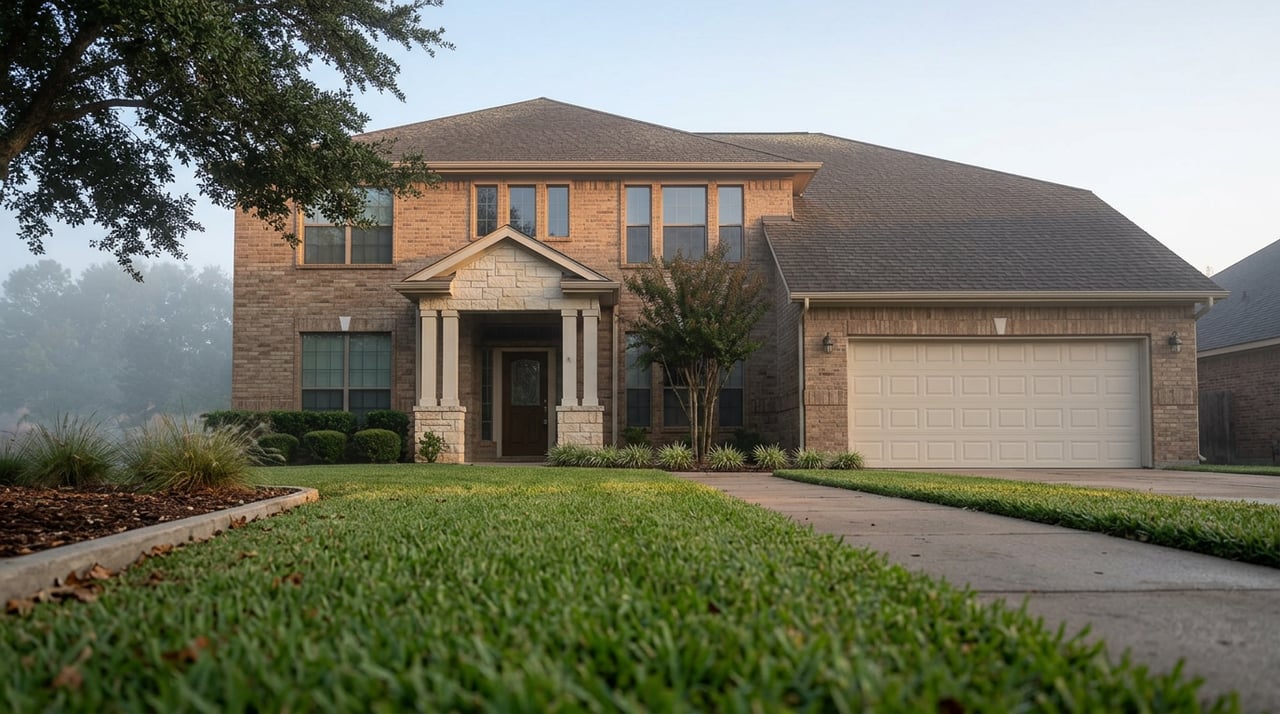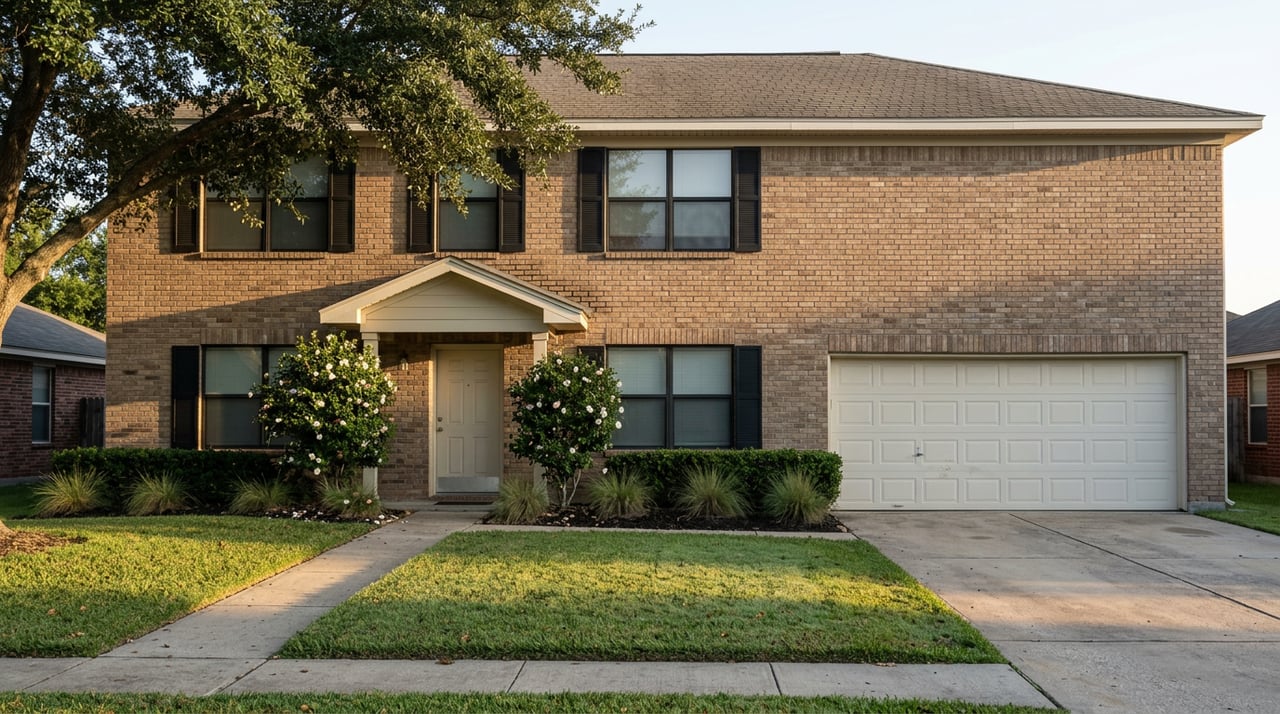
Run the math on two Leander homes priced at $450,000 apiece and you'll land on two very different monthly totals, even before either buyer touches a mortgage calculator. One sits in an older section of the city with no municipal utility district. The other sits in a newer, transit-adjacent community built specifically to solve the thing everyone in Leander complains about: the drive into Austin. At a combined tax rate near 2.2 percent, the older home owes roughly $825 a month in property tax. At a rate closer to 2.52 percent, the newer one owes closer to $945. That's $120 a month, or about $1,440 a year, on identical purchase prices.
That gap isn't a pricing error. It's the bill for the thing the second buyer is actually paying for: a walk to a coffee shop instead of a drive to a toll booth.
The Same List Price, Two Different Bills
Leander's tax structure is layered by design. A base rate from the city and county sits underneath a school district rate, and on top of both sits whatever municipal utility district or public improvement district financed the roads, water, and sewer lines under that specific section of that specific neighborhood. Two homes in the same community, built ten years apart, can carry meaningfully different tax bills because they fall under different MUD assignments. Sections built before roughly 2005 in Leander's older neighborhoods often carry no MUD at all. Sections built after 2015 frequently do, and that difference alone can separate two otherwise comparable $500,000 homes by $1,500 or more a year in tax exposure.
That single fact should reshape how a buyer reads a Leander listing. The number on the sign tells you what you're borrowing. It says nothing about what you're obligated to pay every year after that, and in this market, the gap between those two numbers is wide enough to matter.
Northline Is Where the Theory Gets Tested
Nowhere in Leander makes the trade-off more visible than Northline, the 116-acre mixed-use downtown rising directly around the Leander MetroRail station, the northern terminus of Capital Metro's Red Line. Leander City Council approved an economic development agreement in February 2026 to relocate core municipal operations into the district, including a $4 million loan tied to construction of a new office building, and the city has committed to leasing space there for a decade. The pitch is straightforward: live inside a walkable downtown, step onto commuter rail without a car, and skip the 183A toll altogether.
The tenant list already backs that up. Tacodeli has confirmed a Northline location as part of the district's build-out. Ike's Love & Sandwiches filed plans for a spot there in August 2026. Piada Italian Street Food and a Sprouts Farmers Market are both moving into the corridor. Taylor Morrison is building the residential sections, with Novak-developed Brownstone townhomes already available for purchase, and the district is zoned to Jim Plain Elementary, Danielson Middle School, and Glenn High School.
None of that infrastructure builds itself. Northline's combined tax rate is estimated near 2.52 percent for 2026, one of the higher rates in Leander, because the MUD financing that infrastructure has to be repaid by the homeowners living on top of it. The commute solution and the tax premium are not two separate features of the same neighborhood. They are the same feature, priced two different ways.
The Older Neighborhoods Skip That Bill and Send You a Different One
Leander's more established communities take the opposite bet. Sections of Crystal Falls that predate 2005, along with neighborhoods like Block House Creek, carry no MUD assessment at all. That's part of why Block House Creek shows up consistently as one of the better property tax values in the broader Leander area: an established tax base, a lower city rate, and still inside Leander ISD boundaries.
What those buyers give up isn't home equity. It's the built-in commute solution. A driver using the 183A Toll Road daily to reach Austin or Cedar Park is looking at something in the range of $80 to $120 a month in toll costs alone, before fuel or time. That's a real, recurring expense that shows up nowhere on a settlement statement and everywhere on a monthly budget.
So the choice isn't between an expensive neighborhood and a cheap one. It's between paying for the commute fix through your tax bill every year you own the home, or paying for the commute itself through tolls every week you drive it.
The Rail Ticket Doesn't Run All Day, Every Day
Here's the detail that complicates even the Northline math: buying next to the MetroRail terminus doesn't fully retire the toll question, because the Red Line isn't a 24-hour system. The City of Leander's own transit page confirms the Red Line operates six days a week with no Sunday service at all. Weekday trains run on a schedule built around standard commute hours, with expanded evening service on Fridays and afternoon and evening runs on Saturdays, but nothing on Sundays and reduced frequency outside peak windows.
Systemwide ridership backs up how narrow that window really is in practice: roughly 2,100 riders per weekday as of the first quarter of 2026. That's not a knock on the service. It's a scheduling reality. If a Northline resident's job runs standard weekday hours, the rail genuinely replaces the drive most days. If a Sunday errand run, an evening plan after the last train, or any trip that falls outside the timetable comes up, that resident is back on 183A, paying the same toll as everyone else, just less often. The tax premium buys a partial solution, not an exemption.
The Central Texas Regional Mobility Authority's 183A page is worth a look for anyone weighing that trade-off directly, since it lays out exactly how the tolling works and where the road runs.
Pricing an Address, Not a City
None of this shows up in a headline median. Leander's median sale price sat at $421,000 over the three months ending in July 2026, and that figure is a genuine average of communities with tax structures over a thousand dollars a year apart. Two buyers can close on the same purchase price this fall and walk into meaningfully different monthly obligations for as long as they own the home.
A more useful way to shop a Leander listing:
- Ask which MUD or PID, if any, applies to that specific section, not just the community name. Crystal Falls alone spans phases built across two decades, and the tax picture changes by section.
- Treat HOA dues as a separate line item from taxes. They aren't bundled, and they vary independently by community.
- Test the actual commute at the time you'd really make it, not a midday estimate. A drive from a specific address to the 183A on-ramp, or a walk to the Leander station platform, tells you more than a community's marketing copy.
- Pull the exact combined rate for the address in question directly from the Williamson County Appraisal District before you write an offer. Estimates move; recorded rates don't.
A look back at Northline's own timeline shows a project nearly a decade in the making, still years from finished. The trade-off it represents, tax premium for commute convenience, isn't a temporary construction-phase quirk. It's the deal on offer for as long as that MUD bond is outstanding.
A Few Questions Worth Answering Before You Offer
Does buying near the MetroRail station guarantee lower transportation costs? Not automatically. It can reduce how often you pay a toll, but the Red Line's weekday, no-Sunday schedule means most residents still drive on some trips, and the neighborhoods built around the station tend to carry the highest tax rates in the city specifically because that infrastructure was financed through a MUD.
Is a higher MUD tax rate something to avoid? Not necessarily. It funds real streets, water, and sewer infrastructure that an older neighborhood already has paid off. The question isn't whether the rate is high. It's whether the amenity you're getting for it, walkability, new construction, rail proximity, is worth that recurring cost to you specifically.
How do I find the exact rate for a specific address? The Williamson County Appraisal District maintains the recorded combined rate, MUD and PID assignments included, for individual parcels. That's the number to confirm before you write an offer, not the community-wide estimate in a listing description.
If you're comparing Leander addresses and want the actual tax stack, HOA structure, and commute math run for a specific home rather than a citywide average, Bolanos Realty can walk through it with you section by section. Schedule your free consultation and let's find the neighborhood that actually fits your budget, not just the headline price.